


Capturing Tribal Knowledge Before the "Grey Wave" Retires
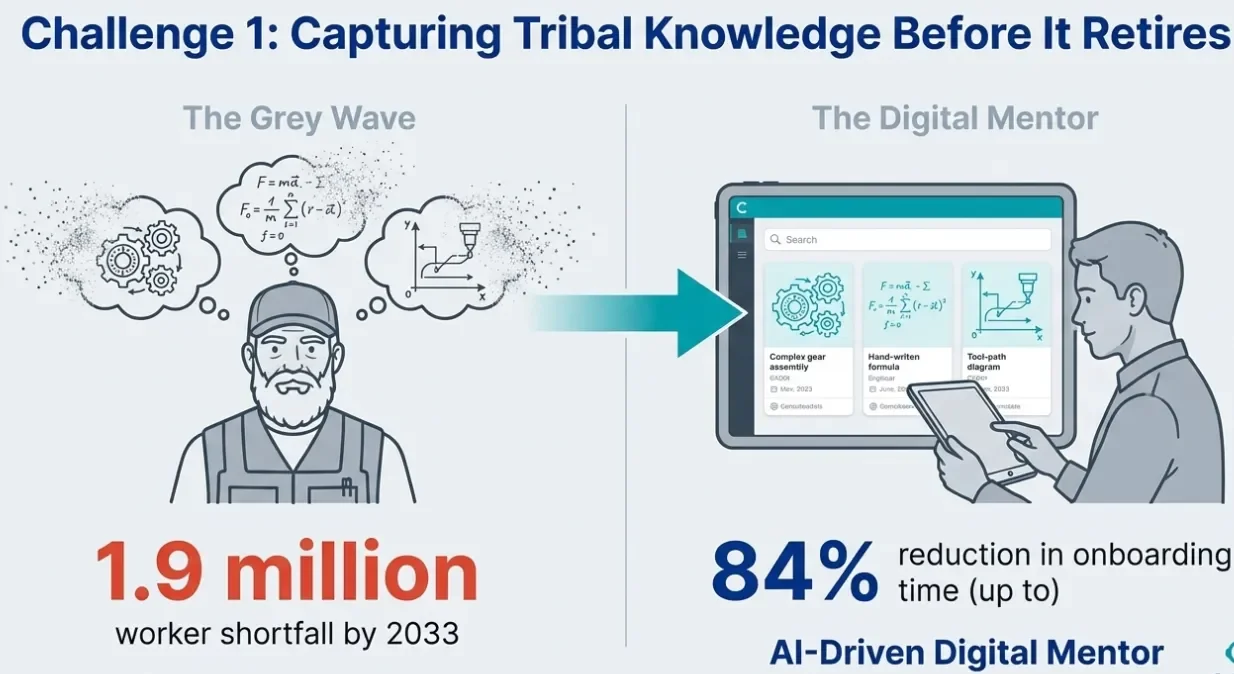
The Challenge: The U.S. manufacturing sector faces a potential shortfall of 1.9 million workers by 2033. For the ME, this isn't just a headcount issue; it is the catastrophic loss of "tribal knowledge"—the unwritten insights into how a 20-year-old press runs or the undocumented workarounds for legacy designs. As veteran machinists retire, they take the "source code" of the plant’s operations with them.
Why It Matters Now: In an environment of labor scarcity, you can no longer design processes that rely on operator skill; you must design processes that are robust against operator inexperience. Without a way to digitize this intuition, onboarding time for new hires remains stuck at years rather than months.
How CADDi Helps: Explorer acts as an AI-driven "digital mentor". By digitizing and centralizing decades of fragmented IP—including handwritten notes on legacy 2D drawings—it creates a unified institutional repository. New hires can use similarity search to instantly access past projects and understand design intent, reducing the time to become productive by up to 84%. Read more in our blog post, The Labor Paradox: Navigating Manufacturing's Unsettling Reality.
Eliminating the "Redline" Void and Broken Feedback Loops
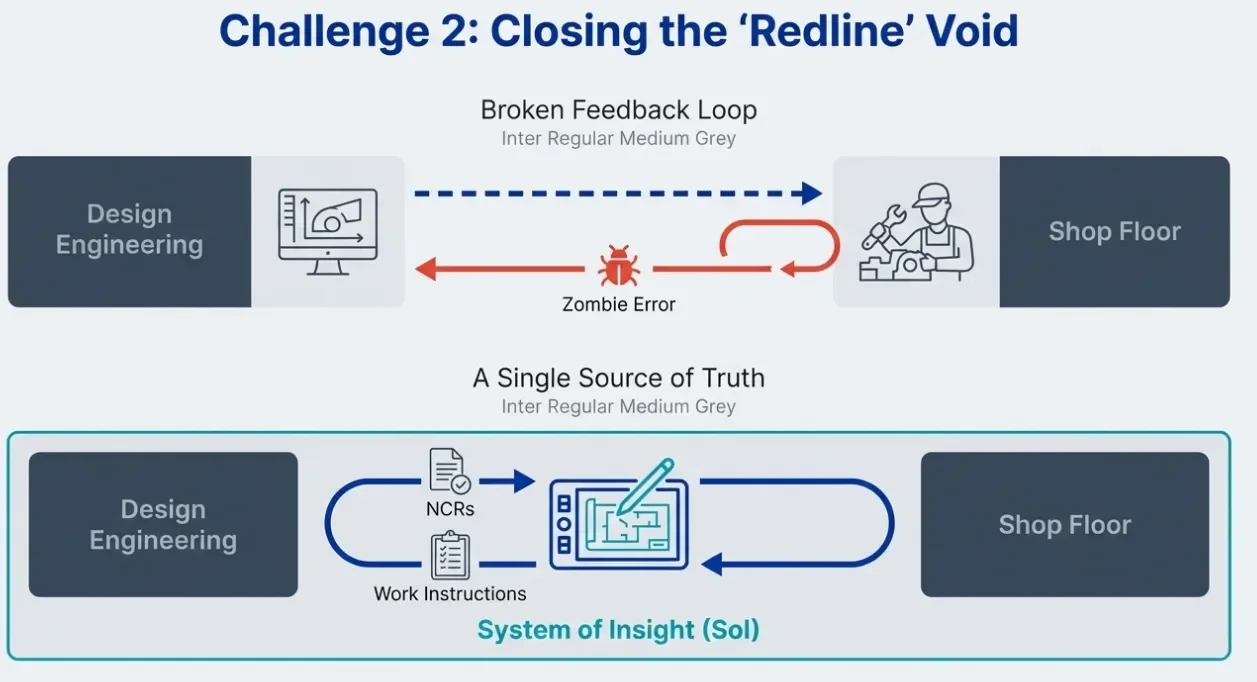
The Challenge: A persistent "Over-the-Wall" culture exists where design engineers throw unbuildable designs to the shop floor. In the digital age, the feedback loop is often broken: machinists "fix" a part manually to keep the line moving without informing engineering, leading to "Zombie Errors" where the same flawed design is released again in the next batch.
Why It Matters Now: With launch schedules getting tighter and customization increasing, MEs can no longer afford to be "manual APIs" connecting the floor reality to the digital record.
How CADDi Helps: CADDi creates a System of Insight (SoI) by linking quality defect reports and manufacturing work instructions directly to the engineering drawing. This ensures that every stakeholder, from procurement to the shop floor, is working from a single source of truth. MEs can provide design feedback based on historical NCR (Non-Conformance Report) visibility, preventing repeat defects across programs. Read more in our blog post on Systems of Insight.
Managing HMLV Complexity with Design Standardization
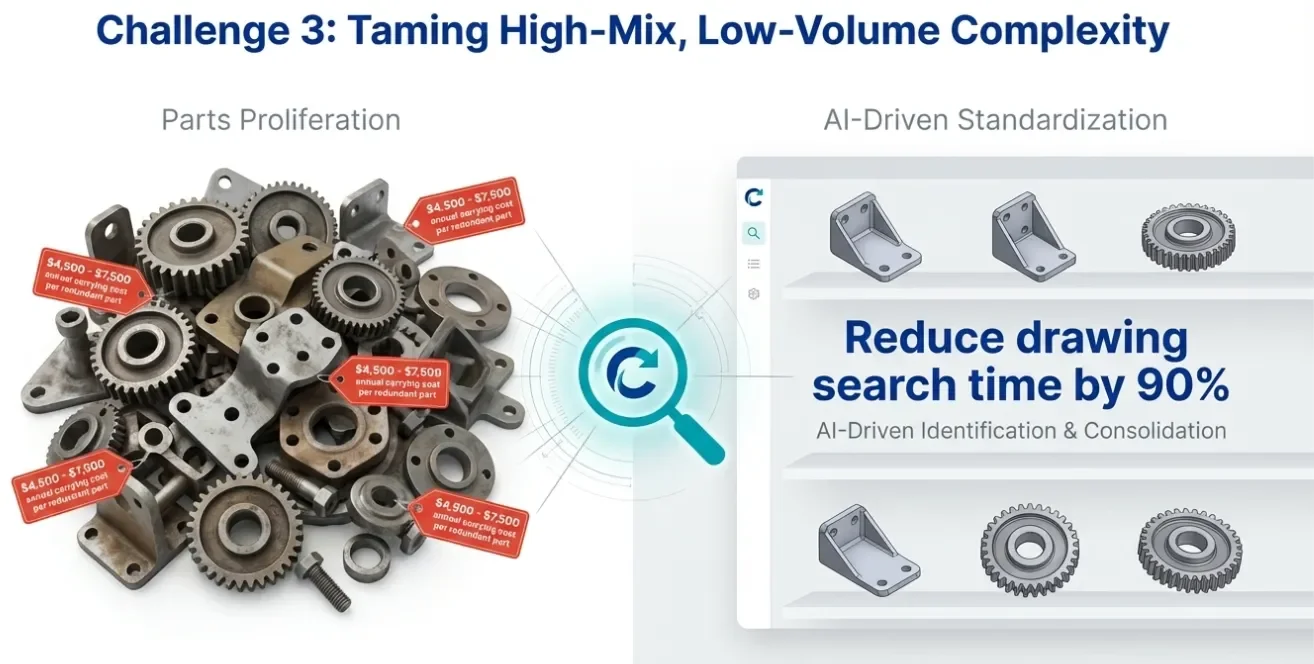
The Challenge: Industrial machinery operates in a High-Mix, Low-Volume (HMLV) environment where every unit might require different labor hours and components. This variability creates a "customization conundrum" where engineers often redraw parts that already exist because they are "perceived as faster to draw a new one than to search for an old one".
Why It Matters Now: Every redundant part adds between $4,500 and $7,500 annually in carrying costs. In a zero-sum labor market, every hour saved from "reinventing the wheel" is an hour reallocated to high-value EV design or compliance modeling.
How CADDi Helps: Using patented AI machine vision, CADDi’s similarity search identifies similar parts across an entire archive based on geometry and dimensions. This allows MEs and designers to identify existing designs that can be repurposed, directly combating parts proliferation and reducing drawing search time by 90%. Read more about the dangers of Parts Proliferation in our blog post.
Resolving "Forensic Engineering" for Legacy Design Debt
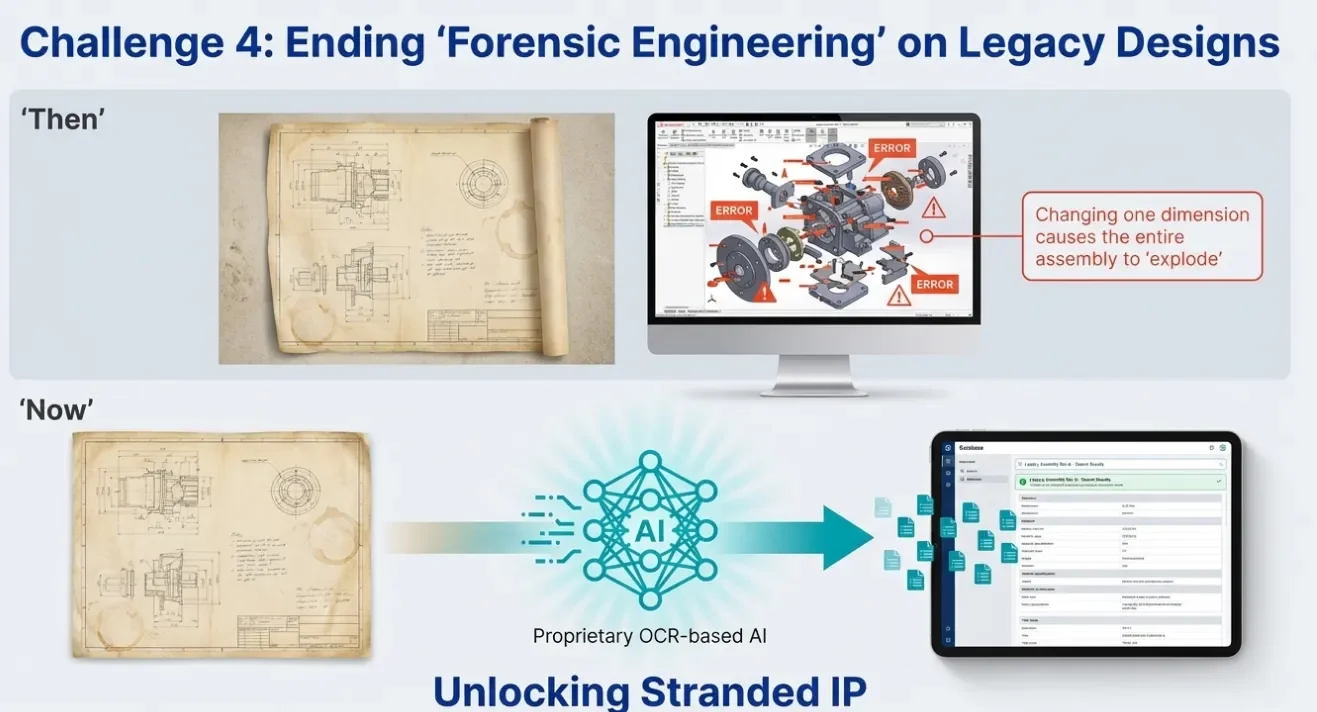
The Challenge: MEs spend significant time performing "forensic engineering"—trying to deduce the design intent of 10-20 year-old models where changing one dimension causes the entire CAD assembly to "explode" with error flags.
Why It Matters Now: American industrial machinery is built on decades of legacy IP. As you are tasked with "brownfield" integration—fitting new robots into old lines—accessing the "why" behind old parameters is essential for safety and speed.
How CADDi Helps: CADDi uses proprietary OCR-based AI to extract data from title blocks, dimensions, and even handwritten notes on legacy documents. This unlocks stranded IP and makes it searchable by shape or keyword, ensuring that 30-year-old drawings are as accessible as those created yesterday.
Bridging the IT/OT Divide and Escaping "Excel Hell"
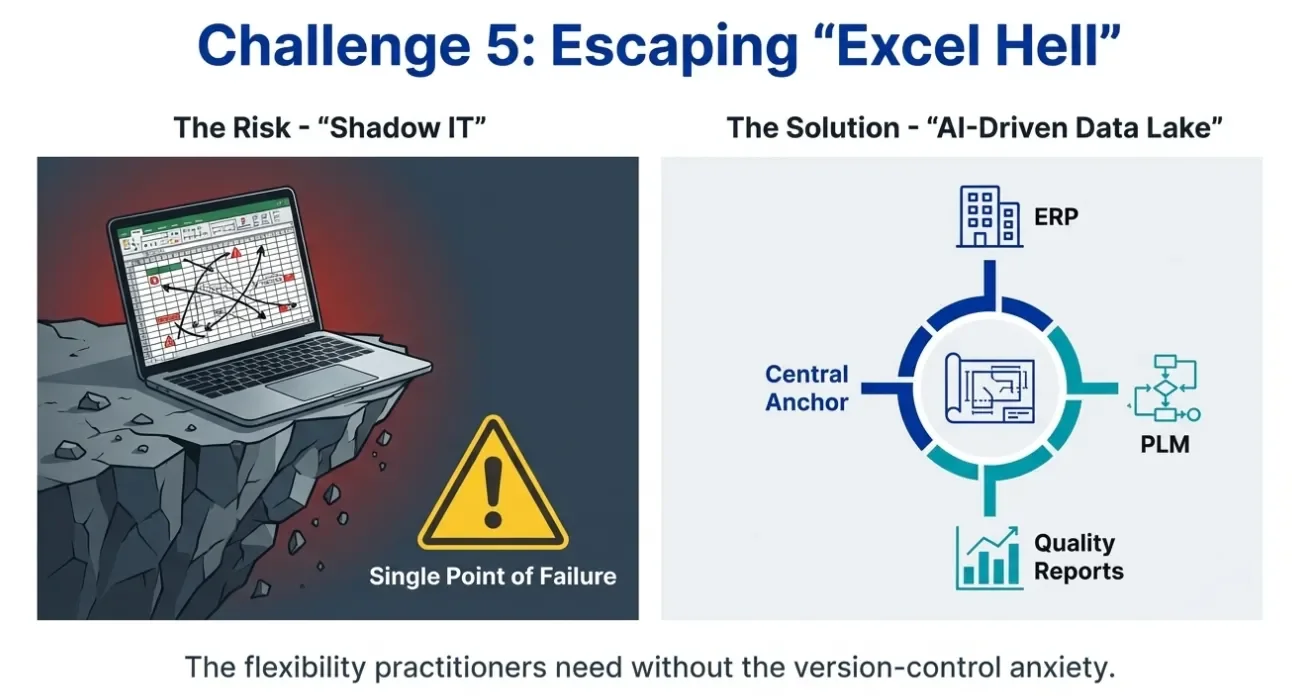
The Challenge: monolythic enterprise systems are often too rigid for the shop floor, forcing MEs to retreat to "Shadow IT"—massive, macro-laden Excel spreadsheets that track scrap, downtime, and shift logs.
Why It Matters Now: Relying on a "magic spreadsheet" stored on a local desktop creates a massive operational risk. If the engineer who built it leaves, the system collapses.
How CADDi Helps: CADDi functions as an AI-driven data lake, integrating fragmented records from ERP, PLM, and CAD. It uses the drawing as the central anchor point to connect requirements, parts, costs, and quality reports. This provides the flexibility practitioner needs without the version-control anxiety of "Excel Hell".
Conclusion: Reclaiming the Professional Identity of the ME
The Manufacturing Engineer is the architect of the physical world. Your value shouldn't be measured by your ability to survive "bumblefuckery" or "firefight" through the night. By transforming your dormant drawing archives into an actionable System of Insight, you can shift your focus back to genuine innovation, DFM mastery, and the Satisfying "First Article High" of seeing a design come to life.
Ready to see how CADDi can bring visibility to your shop floor? Book a personalized demo today or explore our interactive experience.


